


Our Love Food Hate Waste 2024 project consisted of four workshops with a group of local Home Educated whānau. The workshops were inclusive for all ages and interactive so as to have the participants actively learning alongside each other. Each workshop consisted of sharing tips and tricks on how to save money, eat better and prevent kai going into landfill including meal planning and budgeting.


In the first week we discussed how much food we waste, why we need to make changes and ways to prevent or lesson food waste. I made all the children detectives with a notebook and pencil per family. Tasks were watching and noting down how they have done well and where they could do better.
We covered using the freezer more, planning better and purchasing mindfully. We cooked a big pot of mince base. Divided into meal lots that could be frozen or refrigerated and then looked at ways to use this basic pack to turn it into something different, like wraps, burgers, pizza toppings, cottage pie and nachos by adding different ingredients.
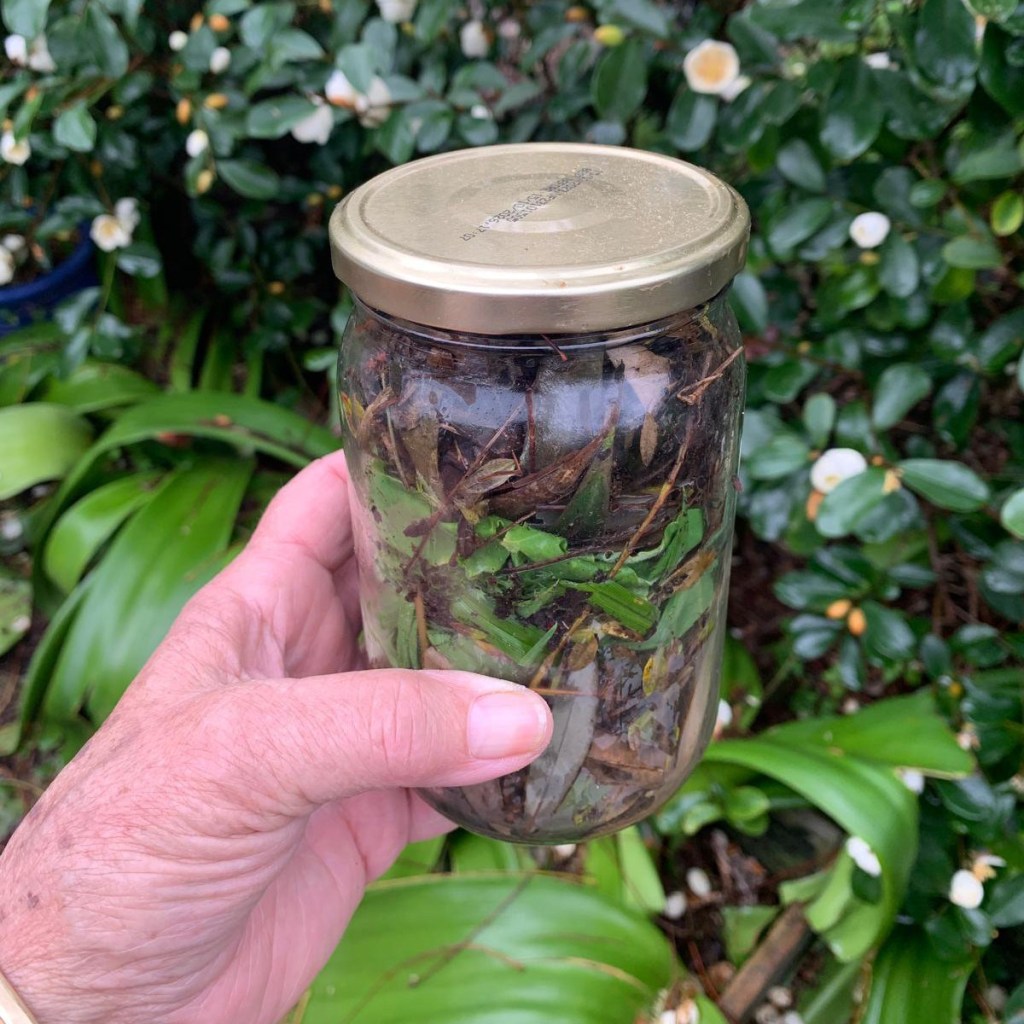
In the second week we made compost in a jar with the children and looked at ways to use left overs and peelings. We taste tested onion and garlic skin powders, Potato peel chips and orange skin lollies. I gave out the ‘EAT ME’ storage stickers and some silicone freezer cubes to save veg water for stock and a ‘STOCK’ plastic bag to use for vege ends and peelings.
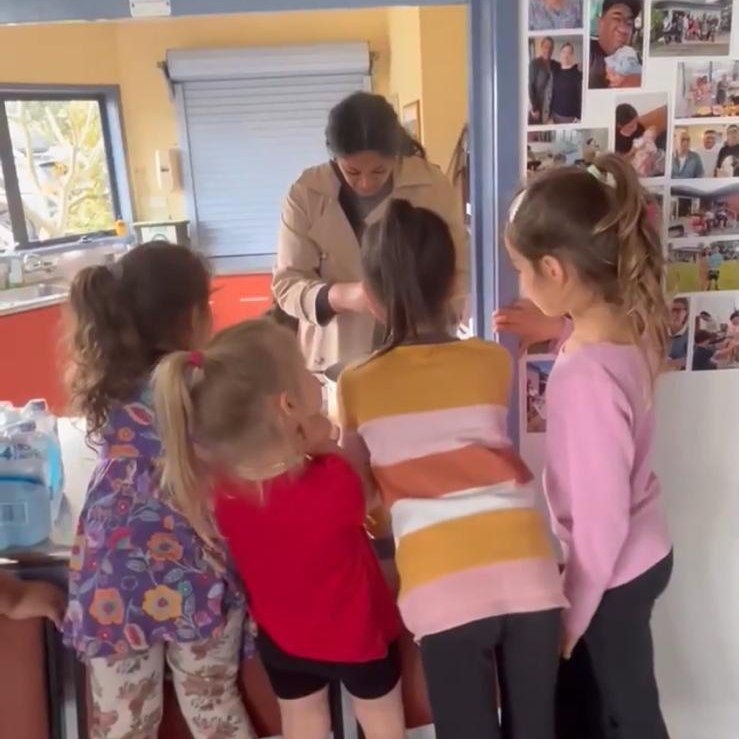


For cooking demo this week we poached a large organic chicken and used it three ways for three meals. Shredded to add to a salad, added to left over rice with veg for fried rice meal while bones and rest of meat was used for a chicken and potato soup.
Week three we looked at the life cycle of some foods…An orange – Bees pollinate the flower – Nine months later fruit is picked, packed and delivered to Supermarket – Purchased and added to fruit bowl – One week later if not eaten it is often wasted and thrown out. We looked at Bread from wheat seed to toaster, meat from a calf to nachos, lettuce from a seed to salad. We talked about honouring the life cycle better.
We made compost on a tarp adding all the ingredients needed for a good compost pile and then later we added to the venues compost bin. We discussed what things can and can’t go into the kai scraps bin to make great compost and why council has adopted this method. For cooking today we made the ‘Whatever Fritter’. Using a base recipe we added bits of leftovers to make them ‘whatever’. We made a savoury batch with grated veg and corn and a sweet batch with pineapple bits and banana. They were delicious.
Week four we discussed the difference between ‘Best Before’ and ‘Use by’ and the 2x2x2 rule for keeping kai. We discussed reducing waste with fussy eaters and went back over our previous three weeks learnings with help from our detectives notes.
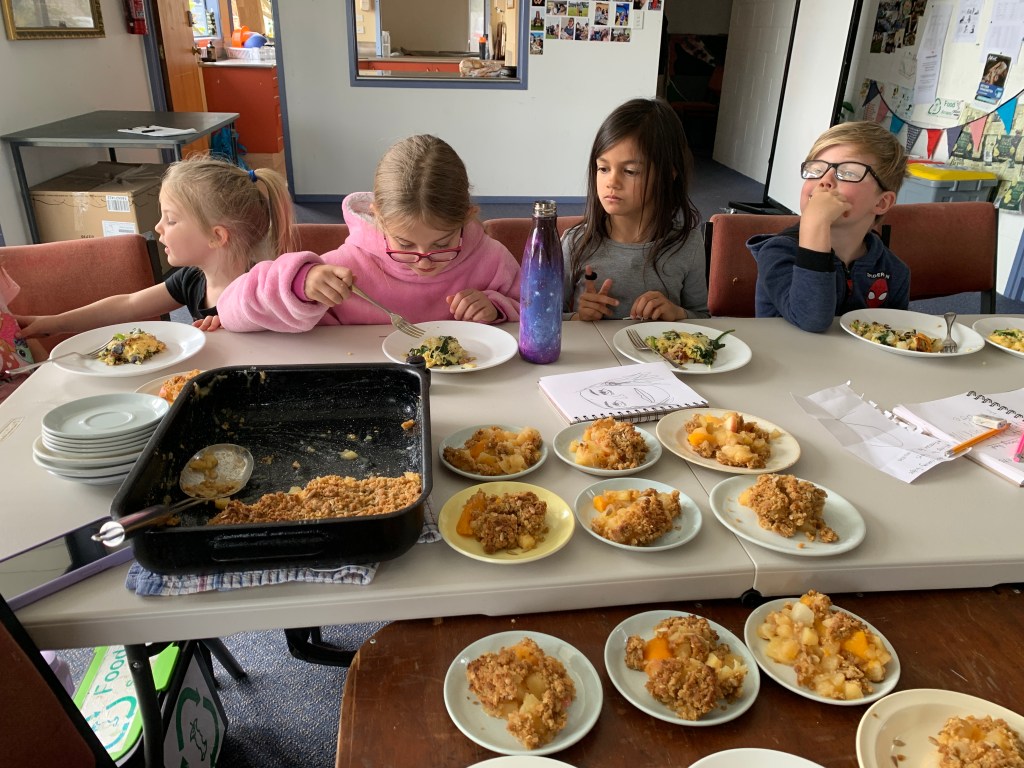
We made a fruit crumble with a mix or leftover fruit bits and a frittata with different bits added into an eggy mix. Both were declared delicious.


These workshops contributed positively to reducing carbon emissions and building community resilience by encouraging the participants to be mindful of what they are putting in their landfill bins/lessen their food waste into their bins, using leftovers and what is often considered food waste in different ways including different cooking techniques, planning beforehand and therefore purchasing less wasted kai, meal planning and cooking in bulk and using the freezer for future meals, making their own compost at home and using council bins correctly and encouraging participants to grow their own kai in their own backyards.
Highlights of these workshops for us were:
- Having the children of the session become detectives, they all dove into this and loved the challenge, they were coming back to each workshop with their detective books and notes jotted down sharing what they had discovered.
- We had a group messenger, it was great having messages from the group sharing what they were doing at home and continuing the learning together. Parents were sharing about the children wanting to try things at home, putting into practice our learnings from the workshops and stories about how they’ve implemented all these changes into their lives.
- Parents shared how the children were watching other whanau outside our workshops and sharing our learnings with them to help them learn too.
- Having all ages engaged and learning together, the children were holding their parents accountable and creating change needed in their homes. The children were very receptive and open to ideas; taking them home and growing these ideas to adapt what they do.
- Keeping workshops at children’s level meant it was easier for everyone to grasp and put into practice with simple and effective things to make changes at home immediately, it was exciting how engaged and active the kids were during the workshops.
Another success working with wonderful whānau, sharing a passion of ours and helping our community to create change. Massive thank you to Auckland Council – Waste Solutions Team and the Love Food Hate Waste Team for the funding to run these workshops in our local community again.

 Rākau Tautoko