


Today was a seed raising workshop at Faith Family Church hall, we had 13 adults and 5 children attend and it all went very well. I had a list of things I wanted to get through in this workshop but as always like to be guided by the participants’ questions and interests. Thrown in today was the addition of 5 young children between 10 and 4 which I had prepped for, unsure of ages or numbers, by bringing a book on where bugs like to live and all the bits needed to build a bug hotel.
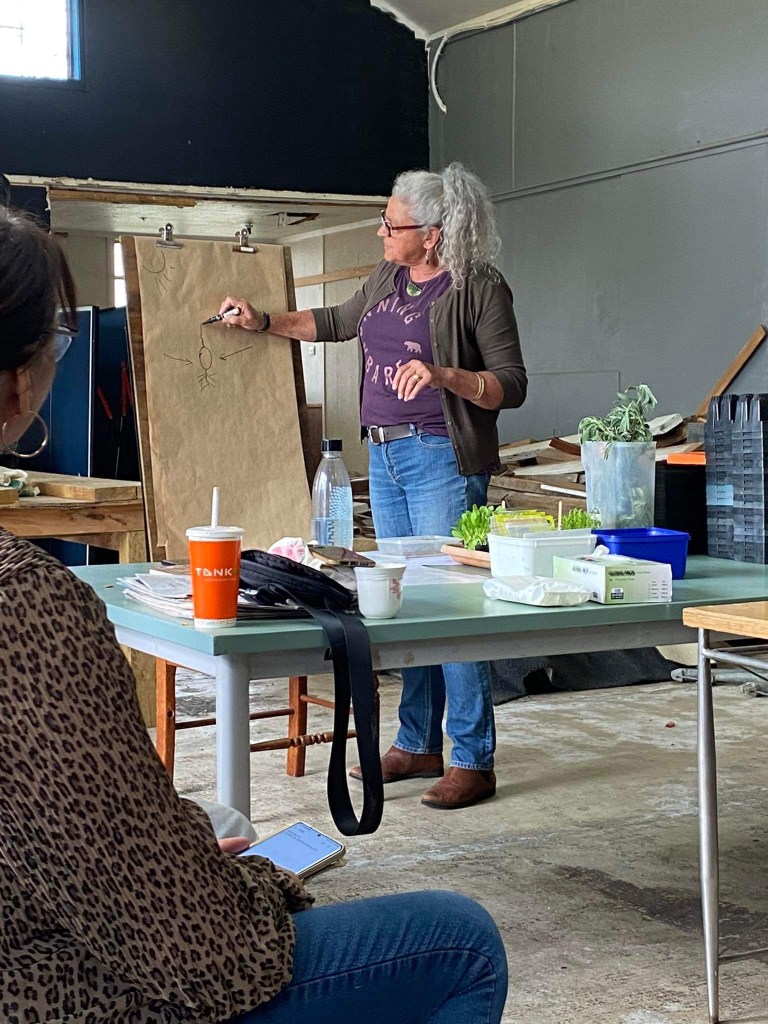
With late arrivals we didn’t get settled till late and started with people introducing themselves and saying abit about their gardening experience. I reminded everyone they will know more than they think, and I welcome them to share that knowledge as it comes to mind, or to ask if they have a question. I handed out a largeish pumpkin seed for each to observe as I talked about HOW a seed grows, using a board to draw what happens above ground and what happens below and then drew what happens when plants grow together. We know each plant doesn’t grow in isolation in nature, so the picture resembled a big scribble as their roots intermingle and I showed how they communicate, share and support each other’s needs.
We talked about replicating that where we can by NOT disturbing the soil hugely and by bringing in companion plants to create an environment that helps, like marigolds with tomatoes keeping nematodes from bothering them. Alyssum keeping white butterflies at bay or nasturtium attracting bugs to it as a sacrificial plant. Also by providing what a plant needs they are more likely to grow well and I gave a laminated copy of a planting guide I had put together.
I then showed seeds I had collected and how they come packaged by nature. Marigolds in little tight parcels, Garlic chives in umbrella-like umbells and chillies in long sleek and shiny casings. I also had sunflowers, pumpkins and others from my garden, as well as some packets of seeds. I talked about how to collect, name and dry them out on paper towels and then use the seeds in the next season. How seeds I have collected year after year from my property will have DNA that suits this space.
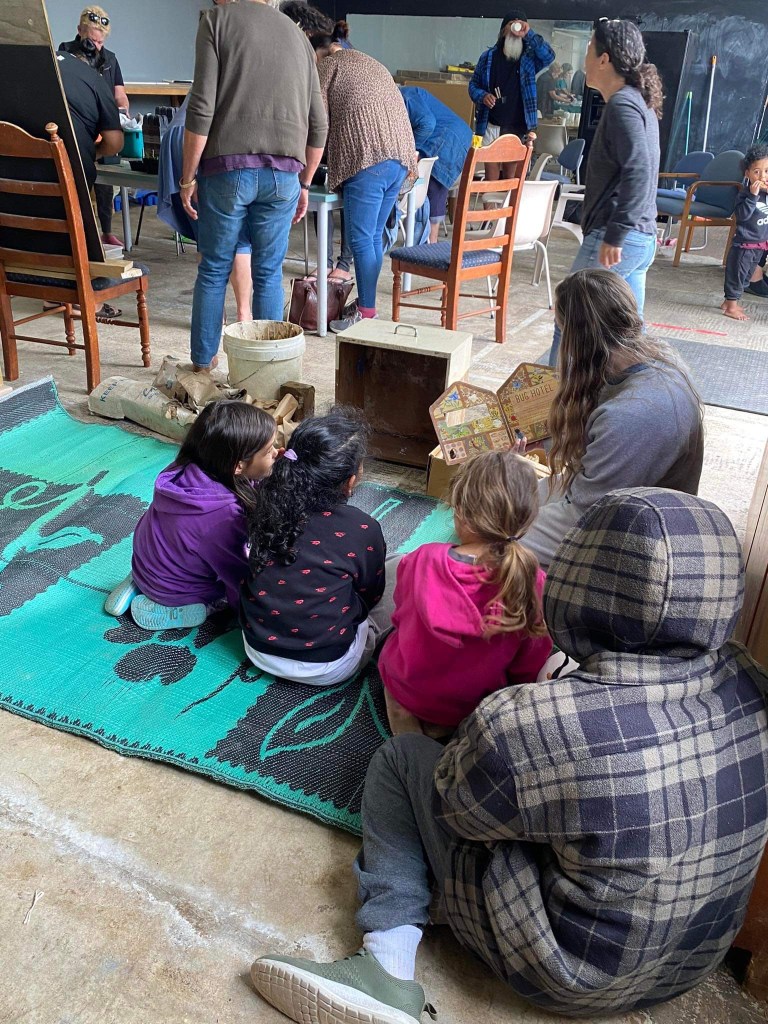
Seed raising mix and containers were there for everyone to plant their own seeds of their choosing and as they moved to this task, I moved the children to a mat and started to read the book I had bought with me, along with all the bits that are mentioned in the story. A participant (Rachel) came forward, said she was an early childhood teacher and asked me if I would like her to do this bit with the children, which was fabulous as I was a bit worried how the time was going. She did a great job ensuring they were engaged and I came in at the end of the story helping to complete the build as we talked about what bugs need to live happily in the garden. We showed the adults what we had built and talked about keeping diversity in the garden, and how a bug hotel helps with that. I also talked about the life cycle of a plant. Its sole purpose is not to feed us, but to procreate, and how to use these examples in nature when we involve our children in the garden. To show how flowers are fresh and beautiful, and then they are tired and dry and eventually die and give back to the earth with seeds and mulch.
From here we looked at Bok choy and Alyssum seedlings I had bought in, already started, and showed them how to ‘prick’ them out taking care not to touch or damage the roots. Each participant was invited to come up and transplant their own into 6 cell containers to take home.
We then looked at the lunar cycle that I follow and how indigenous tribes everywhere follow some form of calendar guided by nature and seasons. Why we can’t easily grow tomatoes in June or cauli in January. I touched on Maramataka and had drawn out the moon’s cycle and showed which was the fertile time for growing and the time for not growing. They were very interested in this and I showed them my diary which I colour code at the start of the year to help me with my planning.
The last thing I had was lavender cuttings and we spent the last bit of time understanding hardwood and soft tip cuttings and potted some of these up.

Everyone helped with the clean up and one participant offered seeds and gardening magazines she had brought to share which was very nice.
Feedback I received from this workshop are as follows:
“Tricia is so warm and a good connector.
I loved the balance of science and hands on and I liked that there were clear expectations that we didn’t have to sit still.
I learnt a lot and I’m already sharing it with my friends and family. I really liked learning about planting to keep the bugs out, eg the alyssum.
I was having a hard day but felt so connected to the community and papatuanuku. I have clear ideas about where I am going next with my little garden. I also really appreciate how te reo and tikanga was woven in so naturally by all. It was a great example of living te tiriti and it made my heart happy”
“Kia Ora Tricia Nga mihi today was very helpful. It’s neat how everything is connected. I knew about the moon and the tides because my dad was a fisherman but didn’t quite click on the whole planting side of things doh! Thank you for your time and whakaaro.
I understand that all living things come from Papatuanuku and the bit about the roots well that sits right with me too. We see roots as tikanga and that’s what holds us down like roots and the trunk and branches that come off that is whanau. The size of the roots corresponds with whats above ground too i get it.
I buzzed out when I realized that as wahine we normally get our monthly at the end of the month, and it’s not the best time to plant. I grew up hearing from the old people how wahine couldn’t go in the sea or the garden when they had their monthly. They never explained why but I just thought it was because it was paru and might contaminate the kai, but today I realised its also because its not the most effective or safe.”
“It was very enjoyable to be there.The learning made sense, common sense way of explaining how something works reinforced with some simple drawings to accommodate the learning and a bit hands on planting, filled a few gaps for myself. Thank you for your time.”
“Hi Trish…thanks for the workshop today it was so inspiring and the mokos really enjoyed the story & bug motel”
“Kia Ora Tricia, Thank you for the wonderful day. I felt very spoilt with all the freebies and really appreciate the well thought out planning guide and companion planting list. I struggle with the “planning” side of growing kai and this will help me immensely.
From each topic I learned numerous things, I thought the topics flowed really well.
They were also explained beautifully, the charts and drawings explained a lot and was easy to follow. The visuals made it easy for the info to stick in my mind so I’ve come away with a good understanding.
The demonstrations were helpful, especially the lavender propagation, and actually seeing the composition of the soil that’s best for sprouting seedlings. I also really appreciated the kid’s activities, getting them involved, the beautiful story and the snacks. Thank you again for accommodating the children. We had a really great day. The kids and I love attending your workshops and thank you very much for inviting us ! “
“Was very educational and has given me more interest in seed raising instead of lining the plant shop pockets cause it’s expensive there!”
“I loved the hands on seedling demonstration. Clear and easy instructions backed with explanatory knowledge. My what, how and why’s were all answered. Thank you Trish for your extensive experience and passion for Food Sovereignty.
Vital tip I got today was when harvesting my veggies cut and leave the root system beneath the soil. This keeps the nutrients within the soil network.
As I cut my cabbages or Cauli and other vegs, I will leave their bases to further enrich my soil. Nga Mihi Aroha Trish.”
“Kia ora Tricia, It definitely was an eye opener. Two communities brought together in a safe warm neutral environment. The course help me understand valuable lessons about seedlings and their growing environment including the maramataka. I am looking forward to using and sharing these values with my Whanau and especially my high fenced garden Nga mihi xo”
“Absolutely lovely, even though I arrived a little late, it felt we needed more time…
I love these wānanga (workshops) I find them very therapeutic, meditative, and extremely knowledgeable. Which I believe is power for the people. Simple kaupapa in learning about seed raising, compost, fertiliser, propagation, and my favourite ‘The Bug Hotel’ They are very beneficial for our communities, people, for our families, especially our tamariki, to help create healthy, abundant and thriving environments where we can live from the land. I believe its the best way to live. And key to a fulfilling life.
Ngaa mihi nunui ki a koe whaea Tricia, your knowledge is key to helping our small communities/neighbourhoods to reclaim and sustain healthy lives. Thank you my love! You’re amazing! Truly appreciate your mahi.”
Thanks for the opportunity to share my passion and knowledge! Look forward to doing it again soon! – Tricia
 Rākau Tautoko